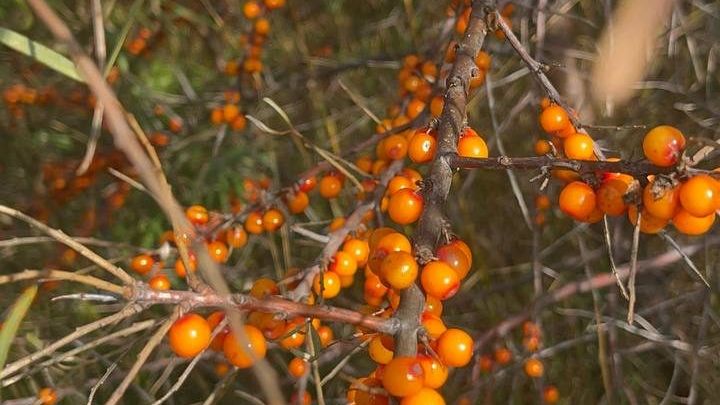
Sea buckthorn is habitually associated with vitamin C and with sea buckthorn oil made from the berries. But this shrub has another, far less known part — the leaves and the bark. Many people do not even consider their therapeutic potential, and that is a pity: the "green" part of the plant works no worse than the berries.
What makes the leaves and bark unique
- Serotonin, the "happiness hormone". Sea buckthorn leaves contain a lot of it, and for plants that is rare. That is why a tea made from the leaves helps fight the autumn blues, improves mood and normalizes sleep.
- Anti-inflammatory effect. The bark is rich in the alkaloid hippophaein: it works as a natural anti-inflammatory and antibacterial agent and helps with digestive system conditions and skin problems.
- Vascular health. Decoctions of the bark and leaves strengthen capillary walls, reduce the permeability of blood vessels and help normalize blood pressure, especially in those prone to hypertension.
- Detox and immunity. The leaves work as a mild diuretic: they help remove toxins and excess fluid and relieve swelling.
Recipe 1. "Anti-stress tea" from sea buckthorn leaves
This one is good for evening relaxation and nervous system support.
- 1 tbsp dried sea buckthorn leaves (or 2–3 sprigs of fresh ones);
- 300 ml hot water — not boiling, about 70 °C (158 °F);
- honey to taste.
Pour the water over the leaves, cover with a lid and let them steep for 15–20 minutes. Strain. Drink it warm, preferably in the second half of the day.
Effect: calms, improves sleep quality, gently lowers blood pressure.
Recipe 2. A general strengthening decoction from the bark
For boosting immunity and gently cleansing the body.
- 1 tsp chopped dry sea buckthorn bark;
- 200 ml water.
Pour cold water over the bark, bring it to a boil over low heat and simmer for 5–7 minutes. Take it off the heat and let it steep under a lid for another 30 minutes. Strain thoroughly through gauze to remove small particles.
How to drink it: 1–2 tbsp 3 times a day before meals, for a course of 2 weeks. The decoction has a pronounced taste; you can add a little lemon or mint.
Recipe 3. A bath for skin and joints
External use: it relieves fatigue and helps with dermatitis and joint pain.
- a handful of fresh or dried leaves;
- a small piece of bark the size of a matchbox;
- 1 liter of water.
Make a strong decoction (boil for 10–15 minutes), strain it and pour it into a bath of warm water. Soak in the bath for 15–20 minutes.
Effect: the skin becomes velvety and muscle tension goes away.
Infusions and decoctions are support, not a replacement for prescribed therapy. With chronic conditions, during pregnancy and when taking medication, the blend and dosage should be agreed with a specialist.